Basic Laboratory Skills

I have been working on a laboratory course that can be taken as a self paced course at home or to be used by teachers in a small classroom, a cooperative school system, or even a regular classroom/laboratory setting. The idea behind this course is that you don’t need to have a lot of expensive laboratory equipment to be able to gain some essential hands-on laboratory experience and investigate a variety of chemical concepts.  Of course, you still need to be safe, and you still need to use good technique; but expense and specialized items should not be a barrier.

Thus, I have set off on this adventure, and have been very surprised at what I have found so far.  If you look at the current education standards there does not seem to be a list of laboratory techniques that students should be exposed to or master while in elementary, middle, or high school.  There is a lot of discussion about observation, understanding of concepts, and reviewing/analyzing data, but nothing related to a hands-on technique based experience.  There are comments about the importance of the laboratory experience in science, but not  anything specific about the fundamental skills that should be obtained.  Of course, this presents a challenge.  To do science, you need to have some basic skills.  But, we haven’t articulated what those skills are.

When I teach Kindergarten students, I tell them that scientists observe, measure, and predict.  Of course, this is a simplified version of the what we really do – but it boils the scientific process to the essentials.  Scientists observe their surroundings and phenomena.  Then formulate a hypothesis about what they are observing, and develop an experiment to test that hypothesis. During the experimentation, they gather data through more observation and measurement.  Finally, they analyze the information obtained, re-evaluate the hypothesis, and start the cycle again.  Also, at some point communicate their observations, findings and conclusions.

From this assessment of the process, three things stand out:

1) Observation skills are necessary.

2) Communication skills are necessary.

3) Measurement skills are necessary.

Hopefully, the first two skills are readily addressed through many aspects of the educational process.  Even very small children are making observations about their surroundings and are trying to communicate about what they see.  Parents and teachers are always working to improve these skills. These skills have to be refined a bit for the scientific process, i.e. note taking and scientific writing, but there are being worked on throughout the learning process.

Measurement is another matter.  For many of us, measurement comes naturally.  How many yards of fabric is needed for a pattern?  How many miles is it to the next town?  How tall am I?  Or, the old adage: measure twice cut once when building something.  However, due to changes in our society, measurement is not as routine as it once was.

Think about it.  We buy prepackaged sandwich meat, and don’t go to the deli counter.  Thus, if you had to cut/slice a ham for two pounds of lunch meat (and actually calculate how much that would be at certain price per pound), would you be able to do it?  How many people make a recipe from scratch?  (Do you know how many teaspoons there are to a tablespoon?)  When was the last time you bought nails, not to mention nails by the pound?

Even when we do measure, we don’t necessarily worry about precision.  If we are a little over or under, it usually doesn’t make a big difference.  But, in scientific measurement; precision is important.  Thus, those skills associated with measurement become very important.  Precision in measurement is communicated by the use of significant figures.  And, the concept of significant figures is lost on most individuals.

A number is written to communicate the measurement; 3 is fundamentally different from 2.54.  These numbers are communicating a different level of precision.  (2.54 is the number of centimeters to an inch; 3 is a rounded 2.54.) For most measurements, the level of precision is not of particular note or issue – unless we are paying for the difference.  For example:  Today’s price per ounce of gold is $1246.01.  This means every one tenth of an ounce is worth $124.60.  So, the difference between 3 and 2.5 is $623 – which is not trivial.  Thus, precision is important.

Measurement and the precision of the measurement are extremely important.  Thus, measurement and the precision of the measurement need to be taught and perfected as they are incorporated into both the language and the process of science.

So, get those students out there measuring with devices – rulers, thermometers, measuring cups, graduated cylinders, scales, balances, tape measures, protractors, etc.  Look at the precision, i.e. the markings on the devices.  Look at how precision impacts the result.  A little error in our measurement can result in huge problems later.  So, how that error gets magnified over time.  Look at the implication of error.  And, learn this essential skill.
Continue the Love of Science Over the Summer

The 2013-2014 school year is winding down (and in some locations already done). But, that does not mean learning or the enjoyment of science stops – in fact this can be the best time of year to explore and build upon what your students have learned (or you for that matter).

My husband and I recently took a trip to part of the United States we had never been before – the Upper Peninsula of Michigan and the “North Woods” area of Wisconsin.  Having just taught Earth Science – I found myself looking at the geology and the weather with a different eye.  We even had discussions about the true technical names of various features and debates how to categorize various items.  Here are some examples:

* What is the name of a rock or boulder left behind by a glacier?  – An erratic

* What is the name of the hillocks left behind by a glacier? – Moraines

* Where is the ice age trail?  The North Woods area of Wisconsin

* Just where does the Mississippi-Missouri drainage basin fit in terms of drainage basins in the world?  It is number 3 – the Amazon is number 1.

Questions like these come up while you are traveling place to place.  You may also have the fun mythology of the formations as well – why is Minnesota the land of 10,000 lakes?  They are the foot prints from Babe the Blue Ox.  Or, from geology – they are the result of glaciation.  PS – the name comes from the Dakota word for “clear water”. It is an easy way to bring in literature, folklore and science – without the stuffiness of a text book.

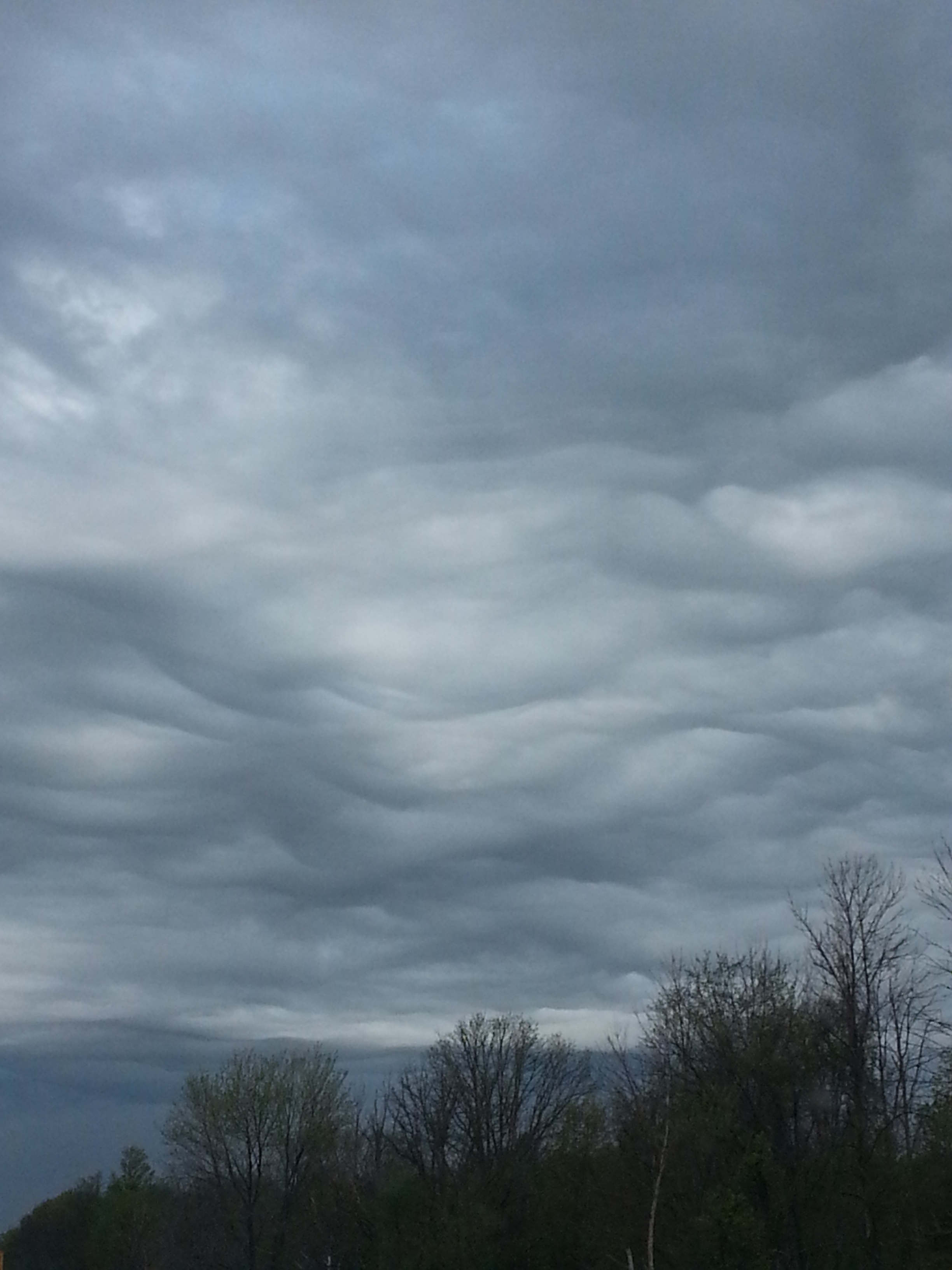
You can use the time to enhance observations – just check out these pictures – taken during our trip. The following are two different examples of cloud formations.  They were interesting to the eye.

The sky above Lake Erie

The sky above Lake Erie

Ponca City Oklahoma

Ponca City Oklahoma

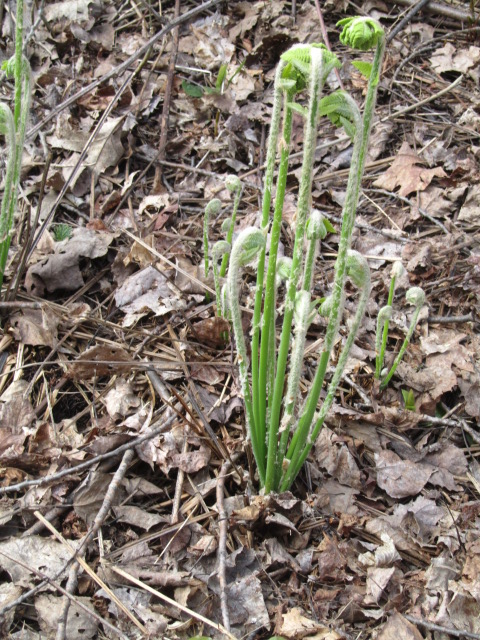
Here are some other observations from the North Woods – are they mushrooms?  What is the plant going to be?  Fungi

New Plant

And look at how the dew decorates the fir tree.

Dew

All of these – are just observations – but lead to questions – and questions lead to exploration.  Use this time to explore.


Story and the Art of Story Telling

If you read various leadership articles, you are likely to have found a number of items related to the “Art of Story Telling.” From a leadership perspective, the idea behind this is that people are more in tuned to messages conveyed via a story. If you want to provide a lesson or a concept – you can put it in a story, people will pay attention, and are more likely to retain the information and get what you are trying to convey.

But there is more to “Story.”  Story throughout all of history has been used to convey – historical events, to entertain, to perpetuate culture, to convey cultural morality, and to pass on family. In general – a culture is defined by its stories. If you think about the stories that are traditionally studied in school – Aesop’s Fables, Greek Myths, and Homer’s Iliad and Odyssey. You can see how story has been used.

There are religious stories – the Old Testament Bible stories – Daniel in the Lion’s Den, Jonah and the Whale, and the Garden of Eden – as well as the New Testament Parables. In Native American culture – there are the Mother Earth stories. And, you can even follow certain themes throughout all cultures – there are common flood stories, and there is always a creation story.

Some stories have been preserved – the Bible, the Qur’an, and many epic poems (Beowulf, Gilgamesh, King Arthur, and others). But, many stories and possibly the most important ones are not usually written. These are the stories that hold families and/or clans together. The tales of how we as individuals are molded and taught. These stories are unique to the personal histories of each family.

For the last several years, my husband and I have noticed that our Society has lost the art of story telling – beyond the “Big Screen” and the television. Children don’t hear Mother Goose, Aesop’s Fables, or the traditional Bible stories unless a special effort is made to convey these through a lesson plan at school or Sunday School. We have seen that when the stories of the overall culture – the cultural fabric or quilt have disappeared – the quicker the disappearance of the family stories particularly the ones told from generation to generation. And, these are even more likely not to have been recorded.

I suppose that this is a result of losing the extended family. In most cases, we don’t live down the street from Grandma anymore. Great Aunt Mary is in Arizona for the winter. Even brothers and sisters are removed by several states. Closely knit communities have seen the “kids” move to the cities because of they don’t want to farm or the mill has closed to get a job. We have lost the time around the kitchen table or the campfire where the stories flow. How did you get that scar on your knee? Why did we live in that particular house? How did Grandpa come to live in that town? Are being lost faster than your current cell phone goes out of date.

We are losing this trait so fast – that there are articles about it for leaders. There are courses in journal-ling. Our Society has to make an effort to revive something that has been a part of being human since language was invented. This is evidenced by the fact that Museums like the Smithsonian have programs where people come to put down their oral histories or a particular story about a topic or an event. We see organizations like the American Chemical Society collect particular personal stories about why they chose to be come chemists. These are efforts being made because we are losing a part of us. We are losing what brings us together and we can very possibly be losing ourselves. Our personal story is what makes us who we are, but it is the grounding, the enrichment of the stories of how our great grandparents, grandparents, parents, and families that really tell us so much more about why we are the way we are.

(Also published on Leadership in Practice)

Oh, My where has the time gone! – Preparing to Learn Science

Life has a tendency to catch up with all of us.  And, it even becomes more challenging when spring is in the air.  I started this blog to help those that wanted a bit of enrichment to add to their science curricula – whether a home school or a classroom situation.  Also, wanted it to be fun for the whole family.  My intent was to do something weekly – but as with all good intentions things happen.  And, so with me.

A little background – in January I took a position as an instructor of science (physics, chemistry and Earth science) at two year college.  I am now teaching full time – lecture and laboratory.   This has definitely helped me with topic areas for the blog and insight into new ways of communicating science.  However, April became a bit busier than I thought as I have been actively working on my college curricula.  With the semester winding down, I am able to pick up where I had left off – and hopefully bring some new insights in preparation for taking and teaching science.

During this past semester – I have learned a great deal about student preparation for their first two years of college – or the preparation of the returning student to college.  Hopefully, I will be able to incorporate and share some of these through this blog.  So, while I will continue to bring fun science activities to this space – I am also hoping to help parents, teachers and even students to prepare to learn science.

For most people there is a perception that science is hard.  (In reality, all learning in any form or subject can be considered “hard.”  Science is no different but the attitudes about science are.)   It has been my observation that there are two fundamental reasons for this and they are both related.  It is the language of the scientist – i.e. the terminology and the math.  Math is the language of the physical scientist – it shows the relationships and communicates specifics.  This mixed with the terminology, the names and jargon, and scientists and practitioners of science tend to “scare” people.  It is because of your human nature – people fear what we don’t understand. And, thus because the language being used is outside of the norm for most individuals – science is hard.

But, stop and think for a minute – what is science?  Science at its most fundamental level is observing your surroundings and trying to understand how things work or why the physical world is the way it is.  Why is the sky blue?  Why is the grass green?  How do plants get the energy they need to grow?  Why does the ball fall to the ground when you drop it?

I have always said it is much harder to teach science to a bunch of preschoolers or kindergartners than high school students. The first is because you have to teach the science in a terms that are understandable for the age group.  But the biggest reason is because they are not conditioned to ask the “right” questions, i.e. a preschooler will ask a very difficult question where a high school student may not even ask a very simple one.

As I mentioned previously – it is the learning that is hard – not the subject matter.  And, what we are seeing particularly in science is that students have yet to understand how to best approach the process of learning.  Sure, in most public or private schools; students have been exposed to the subject matter, have been taught how to prepare for the test, and how to meet the expectations of the course.  But, because of the changes in our systems – note taking skills, using technical literature, practical application of the material, etc. are not as emphasized.  These skills are vital to success at the next level.

Over the next three months, Sophic Pursuits will be working on developing tools, resources, and reference material to help prepare students for the transition into the college and/or upper level course environment.  The focus will be on utilizing the resources that are now available to the student such as virtual laboratories, youTube short lessons, simulations, ect.  As well as focusing on the more traditional type of resources – note taking, “how to read a chapter in a science text”, or “how to succeed in science”.

For those of you in this transition phase or those working with someone in that transition – I would love to hear from you to learn what challenges you are facing.  I would also like to know what questions or concerns that you may have.  And, would love to know what resources you have found helpful.

Stay tuned and hopefully there will be something that helps you take the next steps.  And, you can be better equipped to take those first science courses in college.

A fun way to look at Spring!

Now that spring is here – spring fever is here as well.  Part of spring fever means that everyone wants to get outside and do something.  Photography is a great way to get outside and explore.  With digital cameras readily available – we don’t necessarily think about how cameras work any more – we point and shoot.  But camera technology is built on fundamental physics and whether or not you are using a traditional film or digital camera the physics is much the same.  The only real difference is how the image is recorded and stored. 

Light still passes through a hole and is projected on the recording surface.  Lenses are used to help focus the light onto our specific medium.  To help study the concepts of physics used in cameras – building a pinhole camera out of simple materials that you can find in your home is a wonderful activity.  Depending upon how complex you want to get – you can even make a working 35 mm camera out of a match box.  Here is a link to 23 different pinhole cameras that you can build at home.


Exploring Weather and Other Fluids

It is spring time in Oklahoma – so that means weather (severe weather) is just around the corner. And, it also means some really cool science that can be done to explore concepts like Archimedes’ Principle, Bernoulli’s equations and principles, and Pascal’s Law. Here are few links to keep you busy:

Here is a quick weather book of experiments

One for Archimedes’ Principle

And another for Pascal’s Law

Teaching Earth Science – Oh Boy am I behind!

For many homeschoolers – the phrase “Oh, Boy am I behind!” is a frequent one.  In January and February – the world seems to get fully back in swing – indoor sports, scouts, Church socials, a couple of holidays, and winter weather.  We get caught up in these day to day activities – Wham! March is hear and we realize just where we are exactly and say – I am behind!  Well, as you can see it happens to all of us.

This semester I have been teaching Earth Science and have been very busy looking for resources to make some parts of the curriculum more interesting. For me – rocks aren’t the most exciting.  And, well the rock cycle is only so interesting.  However, I have come across a number of resources that may benefit your programs, no matter what age group you are teaching and whether or not you have access to interesting rock formations in your area.  Here are my suggestions:

From the West Virginia Geological Society – I particularly like the Adaptive Earth Science Activities.  Most of their resources are in downloadable PDFs so you can use them right away.

Those of us teaching anything Earth related – Earth Science, Environment, Ecology, Science in Society, etc.  The United States Geological Survey is a must have link and resource.  Their educational materials are located here. They have videos, pamphlets, lesson plans and a host of interactive features.

Geology.com has a number of resources as well.  Their site has links to experiments, resources and various interactive materials.

You might also try virtual museum tours such as the one at the Smithsonian’s Dynamic Earth or follow the Series How the Earth was Made from the History Channel.

Volcanoes – Beyond baking soda and vinegar

Are you working on a volcano lesson plan?  Want to do something more than just the traditional baking soda and vinegar eruption?  How about exploring the properties of liquids?

When studying volcanoes, the topics of molten rock, lava flows, lahars, and pyroclastic flows are typically included.  Depending upon your lesson plan, you might have a brief mention of how different materials “flow” at differing rates, or how different lavas have different flow properties based upon the silica content.  This flow property is called viscosity – i.e. the property of a fluid that resists the forces causing the material to flow.

Everyone has some hands-on knowledge of viscosity.  Think about the difference in the flow of water versus maple syrup or motor oil on a cold morning versus a hot day.  Yet, we typically don’t do any hands-on science related to this physical property of fluids.  An Earth Science – Volcano lesson is a wonderful place to add this hands-on activity.

Now for your recommendations.

From SEED – A laboratory on the Viscosity of Liquids

From the Royal Society of Chemistry – Viscosity

Or, from Sophic Pursuits – Viscosity Explorations

Some safety precautions.  Know the materials you are using.  The Viscosity Exploration uses dish soap, vegetable oil, corn syrup and water.  It also looks at the change in viscosity with temperature.  So children need to work with an adult to make sure there are no burns.  But, the experiment can be done using ice water, cold water and hot tap water.

Just remember to be safe!

February is Snack Food Month

Besides Valentines Day and Presidents Day – February is Snack Food Month.  Makes sense in the month leading up to Lent, the month of the Super Bowl, and a day focused on chocolates (Valentines Day) – that February would be dedicated to the ever present snack food.

There are lots of activities that can demonstrate science principles using food – so it seems appropriate for snack food month to highlight some food related science.  Penn State has a great food science website that points to a number of other sites that focus on various science activities.

So – explore how molecule handedness changes how it smells.

Find the speed of light using a marshmallows.

Measure the “energy” in food.

Test for glucose and starch.

And have some fun!  – But be safe!

Shake, Rattle and Roll – Earthquake Adventures

When an earthquake of a large magnitude hits, you generally see it on the news.  Even small magnitude earthquakes make the news if they happen in areas where earthquakes are not expected by the general public.  They can be frightening, as we have a limited ability to predict an earthquake and it is disconcerting when the ground moves beneath your feet.

But, you can have some fun exploring what happens – “when the earth moves under your feet”.  (In reference to an old rock and roll tune.)

You can make your own “shaker-table” either out of gelatin or simple materials – sand, lids and blocks.  Here are some sites to allow you to make a shaker-table and test some building construction:

From Teach Engineering.com – a Jello, tooth pick and marsh-mellow

From eHow – shaker table

From FEMA – a teachers resource

From Squidoo – Multiple Resources

So have fun creating your own mini-seismic event!