Happy New Year – Return to Normal?
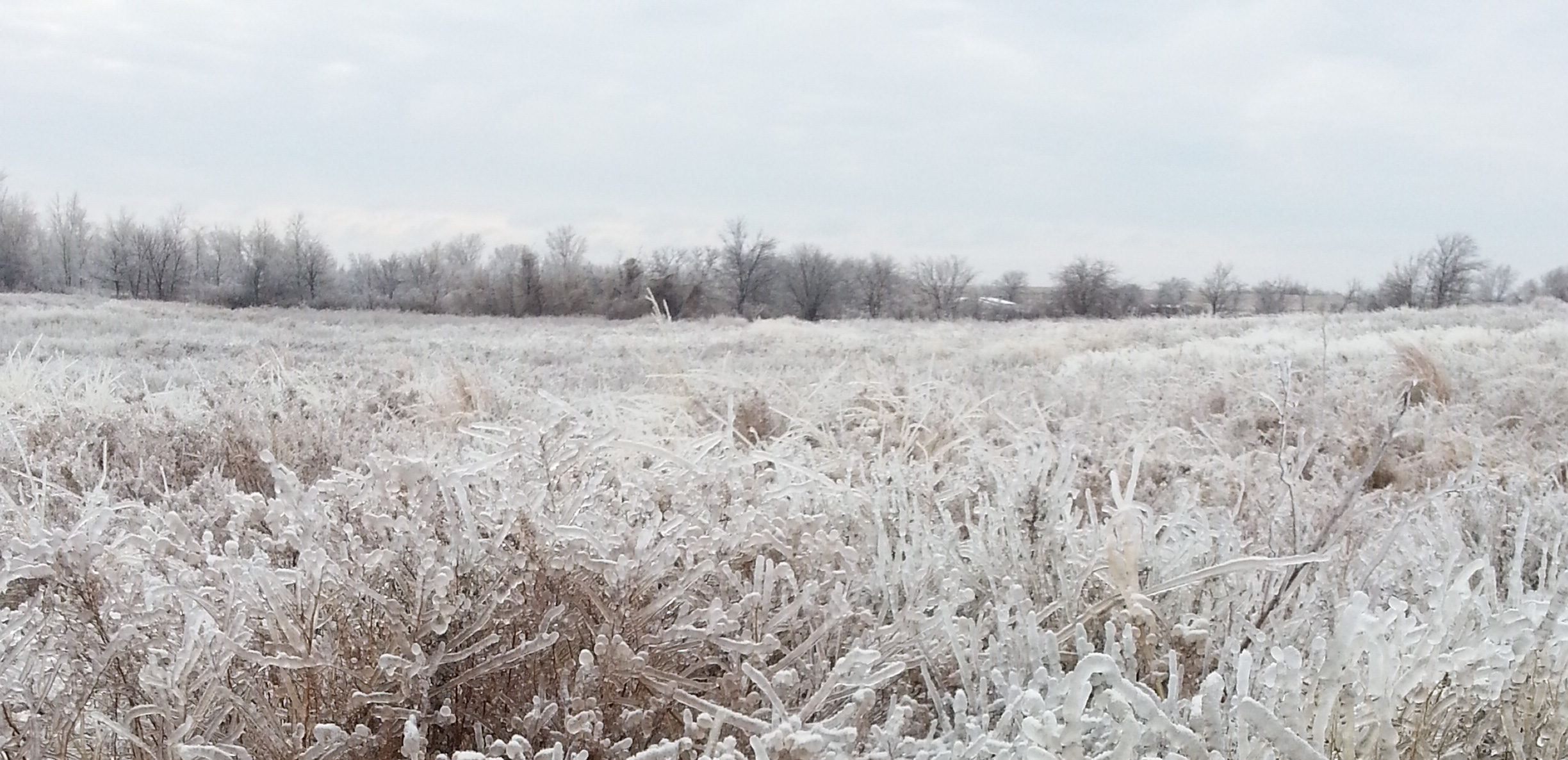
All of us have this definition of normal. With the holidays completed, there is this sense that we are going to return to normal. But, what is that? Really, what we are saying is that we are returning to that ordinary state of routine. For families with children, this means that we are returning to a school routine.
January is also a time when we reassess our school year goals and set some new goals as well. So, what are your goals for the remainder of winter and into spring? Have you though about adding some science activities? January is actually a great time to look at your science curriculum.
The homeschooling catalogs will be coming out soon. So, it is a great time to start thinking. But, there are other resources that come out during January. Here are some good ones to start your creative juices flowing:
Astronomy
Sky and Telescope has come out with their 2015 Observing Calendars and Information. There are other sites as well – the Sea and Sky has their Celestial Events Calendar out as well as Stargazing Tonight.
Science Fairs
It is time to think about those science fair projects (if you haven’t already started). The International Science and Engineering Fair is in May – and students are required to participate in qualifying fairs. You can find information about affiliated science fairs here. Many local fairs are in February – so if you haven’t found your dates – it is time to look.
Global Science Events
Every year there are a number of scientific and medical meetings held around the world. And while, they may not be directed toward you and your family personally, many of these meetings have auxiliary events. For example, the American Chemical Society which will be meeting in Denver in March and in Boston in August usually supports a science activity for families and school children as part of their meeting. Thus, looking to see if one of these events is coming to your area may inspire an activity or a lesson plan. You can find one listing of Science Events here.
Weather and Climate
In addition to astronomy, there is also sky watching as related to weather, clouds, climate, etc. Winter is a great time to look for the Aurora Borealis – you can find the forecast for viewing here. Of course there are a number of sites that follow weather – there is the NOAA.gov and Weather.com. These should provide you with lots of activities.
Check out the Calendar
Earth Science Week – has extended their celebration to the entire year. National Engineering Week is February 22-28, 2015 and information can be found here. Earth Day is April 22 and many professional societies have activities planned. Pi Day is March 14 and this year is special because of the year. (You might also search STEM activities – UCF is holding a STEM Day on Jan. 30, 2015, and STEM Saturdays are being held at Northern Illinois University. There are a host of other Colleges and Universities that are doing STEM outreach – so checking your local community college, or other higher learning institution may also provide you with inspiration.)
Finally, watch the museum and library calendars you never know what might turn up there.
Drought
Drought. What immediately comes to mind? If you live west of the Mississippi River in the United States, water or lack there of is usually the first image that occurs. This morning’s news indicated that while California is getting some much needed rain, an estimated 6 to 7 inches over the next few days, they need over 47 inches to make up for the extended drought that is currently taking place in that region.
States like Oklahoma, Texas, New Mexico, Kansas and Colorado are very familiar with drought. And even though this past year has helped – there are still areas behind in precipitation. The Oklahoma and Texas still have a number of counties that are listed as being in a severe drought. Still, it is not the worst it has ever been that distinction, for North America, is still held by 1934. (See a Science News Article) {The current United States Drought Map can be found here and current world conditions can be found here.} Water is a very precious commodity that many take for granted, yet wars have been fought over it. Boundaries are defined by it. And, movies plots are based on it – Interstellar, 2014; Leap of Faith, 1992, and The Man who Fell to Earth, 1976.
Because of this natural link to water, which is required for our very survival. The word drought is a very powerful thing. There can be droughts of kindness, droughts of thought, and a drought of feeling. In today’s society, as evidenced by just turning on the television and watching the news; there is a drought of understanding and connection to ones own neighbor, and potentially even to ones self. We have lost our sense of connection both to others and to our natural world.
It is time to reconnect. To make the links between where the water from the tap or the milk in the refrigerator comes from. It is not just a pipe or the local grocery store. For water there is a grand cycle – rain to ground to ponds, creeks rivers, underground reservoirs, and oceans, then evaporation back to clouds and back to rain. Yet, for its presence; too much can be a hazard, in the form of snow or excess rain, and too little have a huge impact. Almost 800 million people (water.org) do not have access to clean water.
During this season, let us begin to reconnect. Make links. Show connections between individuals. Show the things that we have in common, rather than our differences. Look at cycles. Look for chances to renew bonds. Look for the good and fulfilling – rather than the barrenness that drought in all its forms brings.
Success vs Failure
Most of us have at least one or to stories about great failures or unrecognized genius. Common names that come to mind are Ford, Macy, Honda, Disney, Gates, Einstein, Goddard, Schultz, and Seuss Giesel. These individuals have become part of the common lore. Success doesn’t always come in a conventional way. These individuals had what at the time were perceived as radical ideas and were told it wouldn’t work or there was no market, or that they were …. You fill in the blank. While these individuals have been inspirations for current generations – who came before? What ideas were presented as success after failures??
Turns out that history has quite a few examples of success after abject failure or what may have been perceived as failures. And, with these the mix of huge successes seemly out of nowhere. Take for example, the development of electricity and ultimately electromagnetic theory and quantum mechanics. There is a wonderful website that outlines a brief timeline of history. This timeline isn’t just about the observations, discoveries, and inventions as they relate to electricity – but it also conveys the foibles of individuals, the narrow view of the world, egos, money, and ultimately a history of society through the development of something that most don’t even think about anymore.
If you live in the United States – you probably think that electricity was a discovery of Benjamin Franklin. It is not the case, he was just continuing a tradition of scientific inquiry; but he is responsible for the selection of the direction of current (turns out he picked wrong, but we carry on with this assumption to this day). The scientific inquiry started with the Greeks or at least that is Western view. Because of the lack of documentation – who knows what was happening in Eastern Cultures or in Persia?
For those of you interested, the traditional view of electricity shows that Bradley, Gray, du Fray and others made observations of “static” electricity and in 1745, two years before Benjamin Franklin, Leyden Jars were invented. A Leyden Jar is a device that “stores” static electricity, a type of capacitor.
The story continues mixed with heated debates, creation of new languages, the language of science mathematics, and competitions. Laplace, Lagrange, and Gauss are all working toward explaining observed phenomena, but today are better known as mathematicians than scientists. (Of course, during this period they weren’t scientists either, but Natural Philosophers.) And, electricity wasn’t even the really big topic of the time, it was light and optics. The electrical observations were asides, interesting phenomena.
The 1840’s and 50’s appear to have been a hot bed of debate in science. You have Lord Kelvin (William Thompson), Henry, Faraday, Doppler, Helmholtz, and Kirchoff all working to explain various phenomena. New ideas about the nature of light – is it the same or different than sound? And, a couple of very radical ideas emerge – heat is a form of energy, and energy is conserved. These are two key ideas in the understanding of how the universe works. These ideas are so radical that the esteemed publication of the time Annalen der Physik rejects them for publication (Mayer in 1842 and Helmholtz in 1847). Yet, today these ideas are fundamental to physics and chemistry. They are fundamental to the development of much of our everyday life: the power we use to get us from point A to point B, devices we turn on with a flip of a switch, and allow us to travel to the edge of the solar system and land on comets. Yet, the ideas were initially rejected as “too speculative.”
These were the role models for Maxwell (mathematician/physicist), Planck, and Einstein. Which of course are the role models for Fermi, Feynman, Bohr, Rutherford, Oppenheimer, and the list goes on.
The history of electricity – is our history, It shows the development of us as a society. It has its ups and downs. Its disputes. Its family feuds. Its “I’ll prove you wrong”. And, ultimately our acknowledgements of who has the last say (at least for now). The question now is – what is that fundamental concept that has already been presented – that has been discounted by the knowledgeable establishment?
October is…… And, the winner is ……
You could say that October is Science Month!
Next week features the announcements of the Nobel Prizes. So, look for a number of science related stories and features from various science organizations and businesses. You can anticipate that the news will be filled with science applications connected to the winners of the Prizes in medicine, chemistry and physics.
Additionally, October generally features announcements for various science competitions. Check out the Intel, Siemens and other notable companies as they begin to announce their regional and national activities. (You can also check out Discovery Channel, National Geographic, and Science Channel – for many activities, lesson plans, etc.) There are sites with monthly themes such as the Siemens Science Day in addition to topic specific sites.
October features National Chemistry Week (October 19-25, 2014). This years theme is the Sweet Side of Chemistry – Candy. There are a number of activities planned around the United States. These will be hosted by Local Sections of the American Chemical Society, as well as Student Chemistry Clubs. You can find teacher resources and associated materials at the American Chemical Society NCW website. Of particular note – related to this NCW topic – was the dedication of the second National Chemical Historic Landmark related to the production of sugar on October 1. This Landmark recognizes the work of Rachel Holloway Lloyd, a woman chemist. (The first recognized the work of Norbert Rillieux, whose birth record states “Norbert Rillieux, quadroon libre, natural son of Vincent Rillieux and Constance Vivant. Born March 17, 1806. Baptized in St. Louis Cathedral by Pere Antoine.” More information about the work and life of Rillieux can be found here.)
October is a great time for slime, glowing science, bubbling punch, and other fun home/class experiments. Take a few minutes to do a quick search of the American Chemical Society education resources while you are looking at the Sweet Side of Chemistry – to find a bunch of “goolish” fun activities. (You can also find sites related to Zombies, Bone Chilling Science, Vampires, and even a bit of graveyard science.)
Have fun and don’t forget to stay safe! (PS if you need safety resources you can always pick up a copy of Staying Safe while Conducting Hands-On Science.)
The School Year is Here
Now that Labor Day Weekend is here – School is officially back in session. It is time to get back into the swing of things. Do you need science lesson plans? Do you need some interactive ideas? Looking for free resources? Here are some places to start:
From Discovery Education – http://www.discoveryeducation.com/ – In addition to their usual offerings – there is a new package from the Navy.
From National Geographic – http://education.nationalgeographic.com/education/?ar_a=1
From the USGS: http://education.usgs.gov/
From the American Chemical Society – http://www.acs.org/content/acs/en/education.html
From NOAA: http://www.education.noaa.gov/
From NASA: http://www.nasa.gov/audience/foreducators/ specifically from the Jet Propulsion Laboratory: http://www.jpl.nasa.gov/education/index.cfm?page=115
Have a great year in Science.
Time to keep your eyes peeled –
 According to the World Wide Words – the phrase “to keep your eyes peeled” which means to stay alert, appeared in the lexicon of the United States in about 1850. There does not seem to be any consensus as to how the expression came about other than it was probably a derivative of “to keep your eyes skinned.” It seems to have appeared in newspapers around 1853. (My quick research noted at least two uses of the phrase by two different newspapers – The Kenosha Telegraph and The Daily Morning Herald of St. Louis, Mo.) Ahh.. Summer is the time to digress a bit.
But, it really is time to be alert to the various science opportunities that are about to be announced. August and September are prime announcement months for competitions, opportunities, enrichment programs, and potential internships. These announcements are generally timed to correspond to with the beginning of the school year.
The challenge, of course, is finding out about the opportunity in time to meet the deadlines and application requirements. Which is why, you need to start now, as many of these programs have requirements to submit letters of intent by the end of October or mid-November, and application requirements in December or January.
Don’t forget to check out local competitions – you may be able to find out information from looking at your local school’s websites and/or through the library. Many professional societies such as local sections of the American Chemical Society, and the AIChE hold local competitions and have various opportunities. (Also, look for your local science fair website – regional fairs are not associated with a particular school and have various ways of entering.)
Here are some links to current science competitions:
Competitions Listed on NSTA’s website
Here is a Try Science’s list of available competitions.
The Siemens Science Competition
Picture Credit (Used with License) Copyright: http://www.123rf.com/profile_chudtsankov’>chudtsankov / 123RF Stock Photo
Are you science adverse?
You are facing the new school year, and you know that you need to incorporate science into your curriculum; but you probably feel like:
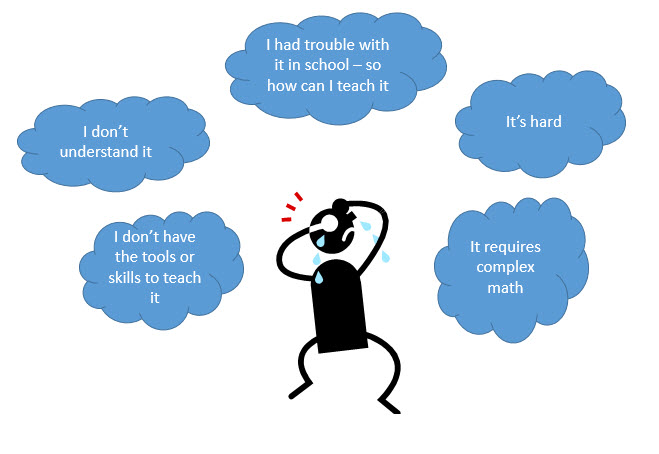
There may even be a few reasons that you have put into words. But, mostly, the underlying fear of science is due to the perception that science is “hard” and you had to be really smart to understand it. This fear is experienced by parents, teachers, and students. The only people who seem to like science are those who are “smart.”
Of course, this may or may not be the case, but in the United States there is a resistance to teaching and learning science. Which is really funny if you think about it, as each and every one of use does something that involves science everyday – and we don’t think twice about it. Do you play a sport? – Most sports involve lots of physics. Do you cook? – Cooking involves chemistry. Do you drive, walk, or cycle to work? – Lot’s of science and engineering are involved here, every thing from judging speed (physics), to the types of roads (asphalt, specialized paint for the line) you drive on involve science. The list is endless.
There was a very good opinion piece in the Washington Post earlier this year about Americans’ aversion to science. In his piece, Michael Gerson wrote:
Science has its own explanation for why people are resistant to scientific beliefs. … Our intuitions about the physical world are generally accurate on a human scale, but on matters that are not immediately related to our survival – say on quantum motion, or the effect of physical phenomena on DNA – our intuitions are pretty much useless. Science has often advanced in an uphill fight against common intuitions.
Fundamentally, this means that people view science as something that is not easily explained and doesn’t make sense to them. And, to add to that the specific language or terminology used by scientists, it is enough to make you want to just throw your hands in the air and do something else.
But, now you are faced with the task of actually teaching science. What are you going to do? First, take a deep breath. Then, throw out the fear. (Remember, most of the time you are scared of something it is because you have never tried it before) Take it one step at a time, and tell yourself that you can do it (or, at least you can find the right resource to help you do it).
So, here are some recommendations that can help you:
1) Pick an age appropriate curriculum. There are lot’s of choices. For younger children, science is usually observational such as watching a plant grow, or looking at how simple machines work. Check out your catalogs for something that looks like fun. For preschoolers, I always go back to what do scientists do – they observe, they measure, and predict what will happen next. It is a very simple statement of the scientific method.
2) Look for resources in your area to support your curriculum. This could be the library or local museum. They may have programs that relate to your specific curriculum or you can tailor your curriculum to correspond with what your local resources are doing. Don’t have a local science or natural history museum – then look a virtual opportunities on the internet.
3) Look for ways to incorporate science via other topics. For example: in your art curriculum, you might be able to incorporate the mixing of colors, the chemistry of paints, or the balancing of objects in a mobile. There are lots of places where science intersects with art. Similarly, sports are another area where you can investigate science doing hands-on activities. Remember, you as the parent or teacher don’t necessarily have to be the expert , all you have to do is connect the appropriate resources – like the library, internet or a local person who knows about the topic. (I remember a high school teacher in my area for her high school chemistry class gave an assignment that was to interview a person who works with some type of chemistry. Most of her students tried to find a chemist or a chemical engineer, but her list of potential interviewees included the person at the hair salon who dyed hair, the lawn care person, a mason, a water treatment plant operator, and an artist.)
4) Ask questions. There are lots of people who have been where you are. Lean on your support groups. They can provide some additional resources.
5) Be safe and have fun. Science is really fun, if you don’t make it a huge mountain. One of the reasons that people are afraid of science is because that feel they have to tackle high level science first. You can start off with fun activities. Get excited about trying new things.
Rodeo Science
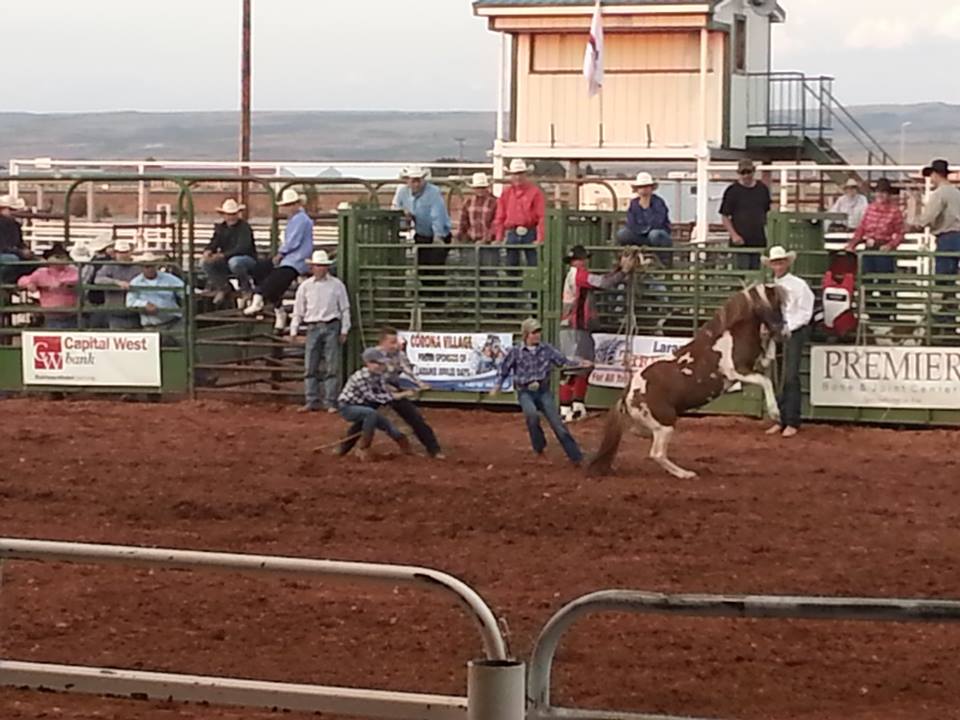
Wild Pony Race, Laramie Jubilee Days 2013
Have you thought about it or seen an article on it – the science of rodeo? As July is prime rodeo season in the United States: Fourth of July Weekend, Cheyenne Frontier Days, and Cavalcade just to name a few, it seems like an appropriate question to ask. And, as it turns out, while there is lots of science going on; there is not a lot of it published as “rodeo science.”
Here are some prime examples of science at work at the rodeo:
Animal Breeding Programs – Rodeo involves two types of athletes, the human and the animal. The “rough stock,” the bucking bulls and broncs are highly valued animals. Additionally, for the timed events humans team up with their animal partner, typically a very well trained and bred horse. Additionally, there are cattle, goats or sheep that are used in the timed or other events. Thus, there is a great deal of science going on to ensure good genetics are passed on to the next generation of livestock. For the “rough stock,” there are numerous “born-to-buck” programs to breed future champion broncs and bulls. In these programs, the genetics are carefully monitored and tracked.
Nutrition and Veterinary Science – Once the animal is physically in the world, care is essential to keeping the animal healthy. Animal nutrition specific to the animals breed and work is complicated science. Add to that the variety of animals used in rodeo, the nutritional needs of the individual animal competitors can become a full time job for the rodeo stock contractor. This is in addition to the veterinary care that these animals receive to ensure they are in good health while on the rodeo circuit.
As for the human competitor’s partners, these horses receive constant care and attention during training as well as the rodeo season. Their diets and health are monitored daily by their teammate and are routinely seen by veterinarians. Horses that travel are required to maintain certain paperwork signed by veterinarians and are required to show that paperwork prior to entering various rodeo or fair grounds. (Olympic horses that travel outside the United States have what are known as equine passports so that they can travel to various competitions.)
Safety Science – In the early days of rodeo, protective gear was a good saddle, a cowboy hat, boots, jeans, and a long sleeve shirt. Today, you see several different types of protective gear – both for the cowboy or cowgirl and the animals. For the horses used by the cowboy or cowgirl, you may see specialized boots, shoes, and other gear to help protect the horse’s legs and feet. For the roping steers, you will see horn wraps. Horn wraps are used to protect the steer from injury due to the rope. Then there is the “rough stock” rider’s gear: gloves, vests, neck protection, and safety helmets. This equipment has become more and more “high tech” with the advent of advanced materials and information on sports injuries from other sports. Even the cowgirls wear shin guards to protect their legs when running the barrels. This doesn’t even address the equipment worn by the “bullfighters” or your chute workers.
Equipment – There is a variety of equipment that is used in rodeo events; from the hand hold rigging for the bareback bronc to the ropes used in steer or calf roping. (Did you know that there are ropes designed for the person who throws left-handed versus right-handed?) The saddles that are used by the steer wrestlers will be different than those used by the barrel racers. The ropes, riggings, and other equipment are designed for the specific uses and are always being modified and improved.
In addition to this “hidden” science, there is obvious evidence of physics. What goes up – must come down. Or, pure examples of Newton’s Laws – for every action there is an equal and opposite reaction or an object in motion stays in motion unless acted upon. As the horse or bull bucks, the cowboy has to react to the changes in momentum and the forces that the animal is generating in order to stay on for those 8 seconds. If not, he is going to experience gravity usually in a pretty spectacular manner.
The human rodeo competitor not only has to account for his/her own motion and reactions but for those of the other competitors – the horse, the cattle, or the bull. These competitors do more complex calculations in a brief 4 seconds for the ropers, 8 seconds for the “rough stock” riders, and 15 seconds for the barrel racers, than most theoretical physicists will do in their entire lives. The only difference is that rodeo competitor never writes it down and if they are really good gets to take home a buckle and maybe a bit of prize money.
Getting ready for the new school year! Science Resources
Are you getting ready for the new school year? Have you even thought about it yet?
For many homeschoolers, July is the time to savor the last bits of summer and to start thinking about the new school year. So, it is planning season.
Are you planning a science curriculum this year? What resources are you going to use? No matter what resource you are planning – you need to stay safe. Sophic Pursuits – has a book for you.
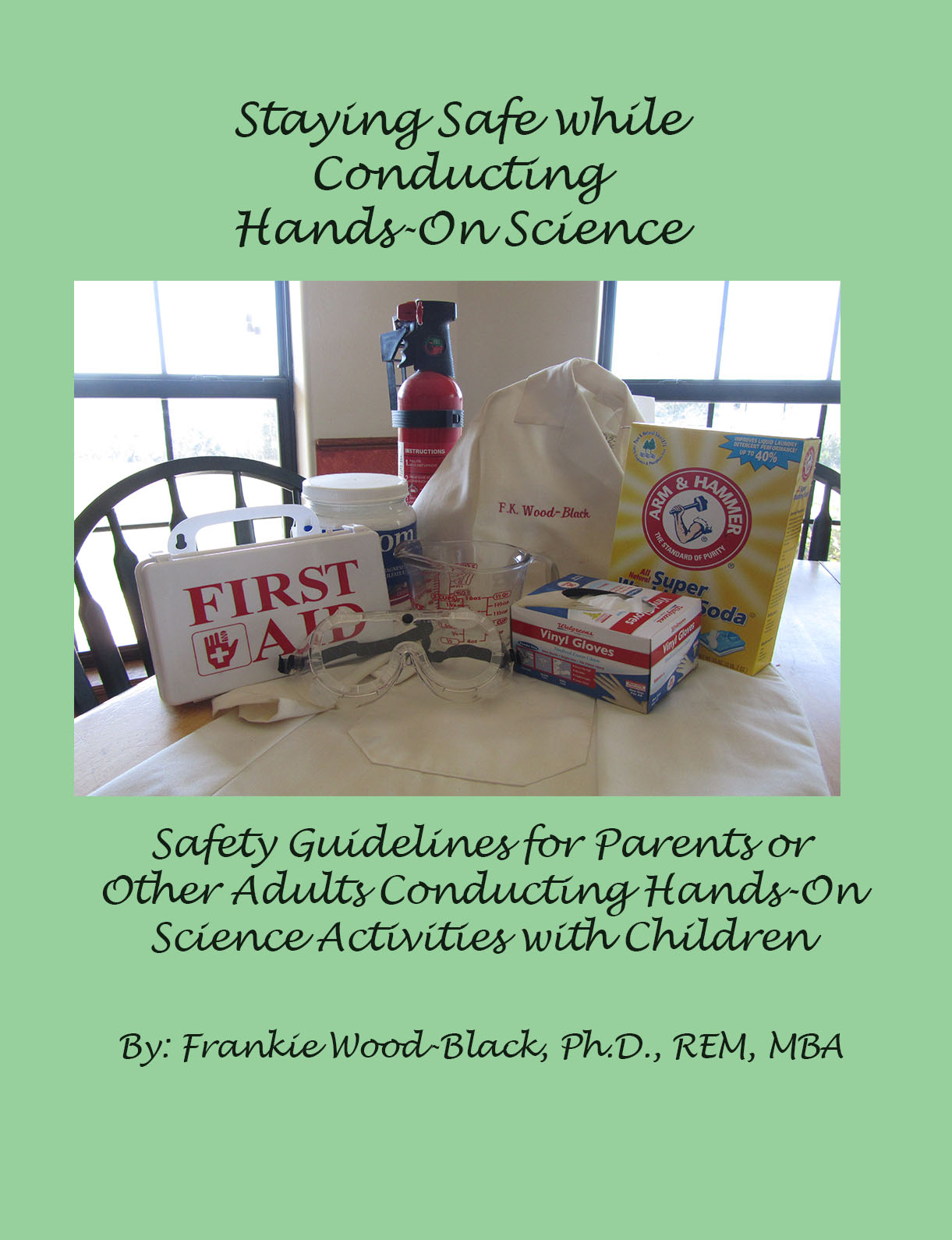
This book is designed primarily for the home school parent to help them assess the experiments and activities that can be found in books or on the internet. You can get this book through your distributor or it is available in paperback, KindleTM ebook, and a downloadable PDF. More information can be found here.
Are you looking for a high school chemistry curriculum? The big challenge here is not finding a good text, it is finding a laboratory portion that can be done at home. Sophic Pursuits is working to help you here as well.

This laboratory course is designed to accompany any chemistry text or can stand alone. The course is written so that any parent or instructor can us it – whether you have a science background or not. It focuses on basic laboratory skills that the high school student will need for that freshman laboratory in college – measurement techniques, chemical calculations, laboratory note taking, and laboratory reports.
The chemicals and experiments are designed such that you can use traditional laboratory equipment or items from your kitchen. It comes with an equipment needs list with references about purchasing the required items. Sophic Pursuits has worked hard to make this course affordable and the required items should be easily obtained at a local hobby shop, hardware store, grocery store or the internet. A sample laboratory activity – a chemical scavenger hunt – has been posted here. In this activity, the student will be looking for chemical information: name, physical properties, etc., as well as establishing a laboratory notebook. Instructions for the activity; background information about chemicals and chemical formulas; and information about setting up a laboratory notebook are included as part of the laboratory.
The laboratory course includes:
- A Safety Information Scavenger Hunt
- A Chemical Information Scavenger Hunt
- Accuracy and Precision
- Measurement
- Density
- Physical Properties and States of Matter
- Moles, Molecular Weight, and Molarity
- Freeze Point Depression
- Writing a Laboratory Report
- Exploring Solubility
- Precipitation Reactions and Yield
- Exploring Chemical Reactions
- Putting It All Together to Determine an Unknown
There will be both a student and instructor manual. Sophic Pursuits is looking for 10 families to pilot the program. These pilot families will receive drafts of the student and instructor information as well as a support from the author. The idea behind the pilot will is to refine the draft manuals in order to provide a better overall product. If you are interested in piloting the first semester course please contact us. Remember the number of free programs are limited.
 sophicpursuits