Happy New Year – Return to Normal?

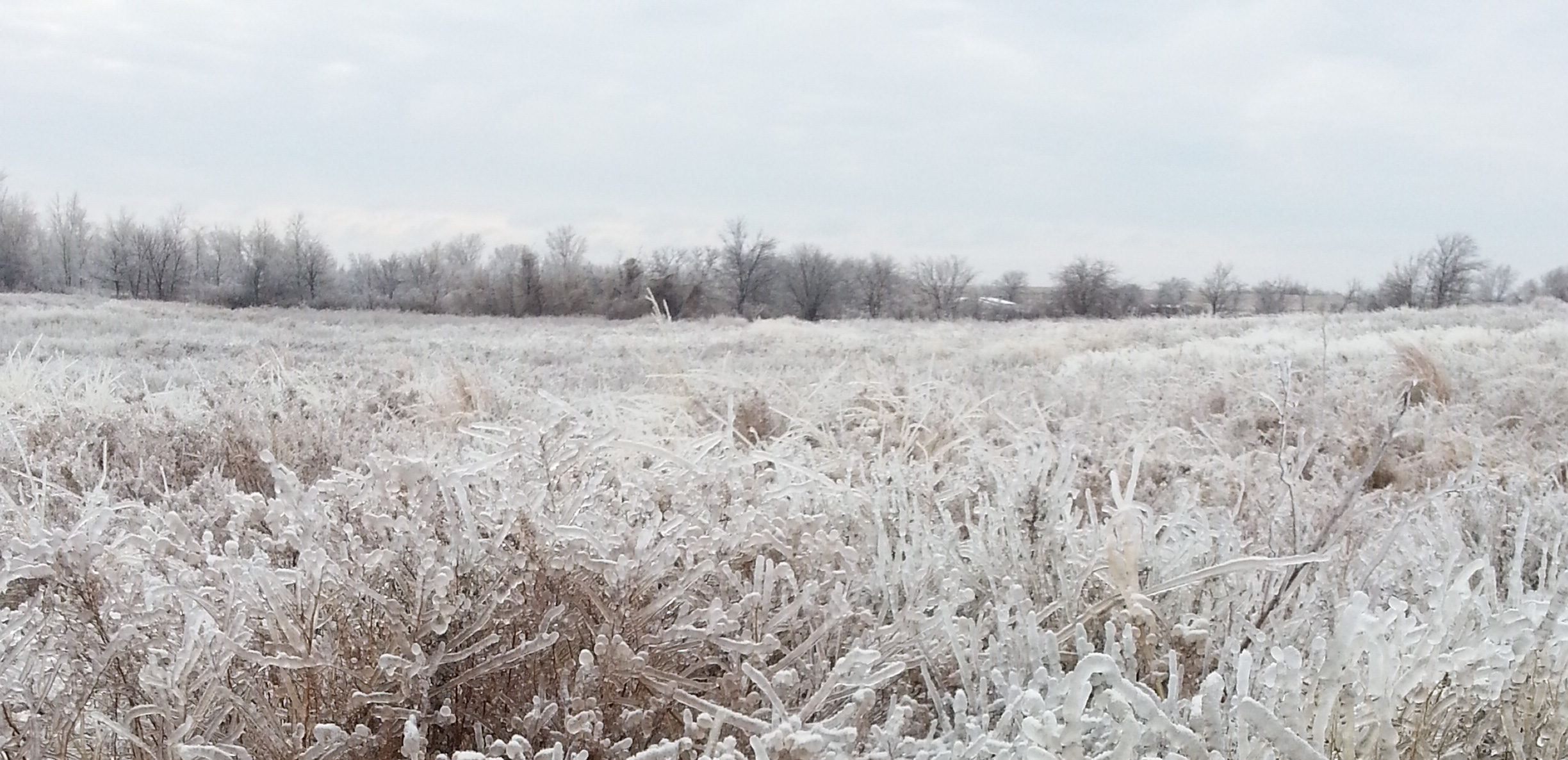
Frosty Field

All of us have this definition of normal.  With the holidays completed, there is this sense that we are going to return to normal.  But, what is that?  Really, what we are saying is that we are returning to that ordinary state of routine.  For families with children, this means that we are returning to a school routine.

January is also a time when we reassess our school year goals and set some new goals as well.  So, what are your goals for the remainder of winter and into spring?  Have you though about adding some science activities?  January is actually a great time to look at your science curriculum.

The homeschooling catalogs will be coming out soon.  So, it is a great time to start thinking.  But, there are other resources that come out during January.  Here are some good ones to start your creative juices flowing:

Astronomy

Sky and Telescope has come out with their 2015 Observing Calendars and Information.  There are other sites as well – the Sea and Sky has their Celestial Events Calendar  out as well as Stargazing Tonight.

Science Fairs

It is time to think about those science fair projects (if you haven’t already started).  The International Science and Engineering Fair is in May – and students are required to participate in qualifying fairs.  You can find information about affiliated science fairs here. Many local fairs are in February – so if  you haven’t found your dates – it is time to look.

Global Science Events

Every year there are a number of scientific and medical meetings held around the world.  And while, they may not be directed toward you and your family personally, many of these meetings have auxiliary events.  For example, the American Chemical Society which will be meeting in Denver in March and in Boston in August usually supports a science activity for families and school children as part of their meeting.  Thus, looking to see if one of these events is coming to your area may inspire an activity or a lesson plan.  You can find one listing of Science Events here.

Weather and Climate

In addition to astronomy, there is also sky watching as related to weather, clouds, climate, etc.  Winter is a great time to look for the Aurora Borealis – you can find the forecast for viewing here. Of course there are a number of sites that follow weather – there is the NOAA.gov and Weather.com.  These should provide you with lots of activities.

Check out the Calendar

Earth Science Week  – has extended their celebration to the entire year.  National Engineering Week is February 22-28, 2015 and information can be found here.  Earth Day is April 22 and many professional societies have activities planned.  Pi Day is March 14 and this year is special because of the year.  (You might also search STEM activities – UCF is holding a STEM Day on Jan. 30, 2015, and STEM Saturdays are being held at Northern Illinois University. There are a host of other Colleges and Universities that are doing STEM outreach – so checking your local community college, or other higher learning institution may also provide you with inspiration.)

Finally, watch the museum and library calendars you never know what might turn up there.
October is…… And, the winner is ……

You could say that October is Science Month!

Next week features the announcements of the Nobel Prizes.  So, look for a number of science related stories and features from various science organizations and businesses.  You can anticipate that the news will be filled with science applications connected to the winners of the Prizes in medicine, chemistry and physics.

Additionally, October generally features announcements for various science competitions.  Check out the Intel, Siemens and other notable companies as they begin to announce their regional and national activities.  (You can also check out Discovery Channel, National Geographic, and Science Channel – for many activities, lesson plans, etc.)  There are sites with monthly themes such as the Siemens Science Day in addition to topic specific sites.

ncw-candy-banner

October features National Chemistry Week (October 19-25, 2014).  This years theme is the Sweet Side of Chemistry – Candy.  There are a number of activities planned around the United States.  These will be hosted by Local Sections of the American Chemical Society, as well as Student Chemistry Clubs.  You can find teacher resources and associated materials at the American Chemical Society NCW website.  Of particular note – related to this NCW topic – was the dedication of the second National Chemical Historic Landmark related to the production of sugar on October 1.  This Landmark recognizes the work of Rachel Holloway Lloyd, a woman chemist.  (The first recognized the work of Norbert Rillieux, whose birth record states “Norbert Rillieux, quadroon libre, natural son of Vincent Rillieux and Constance Vivant. Born March 17, 1806. Baptized in St. Louis Cathedral by Pere Antoine.”  More information about the work and life of Rillieux can be found here.)

October is a great time for slime, glowing science, bubbling punch, and other fun home/class experiments.  Take a few minutes to do a quick search of the American Chemical Society education resources while you are looking at the Sweet Side of Chemistry – to find a bunch of “goolish” fun activities.  (You can also find sites related to Zombies, Bone Chilling Science, Vampires, and even a bit of graveyard science.)

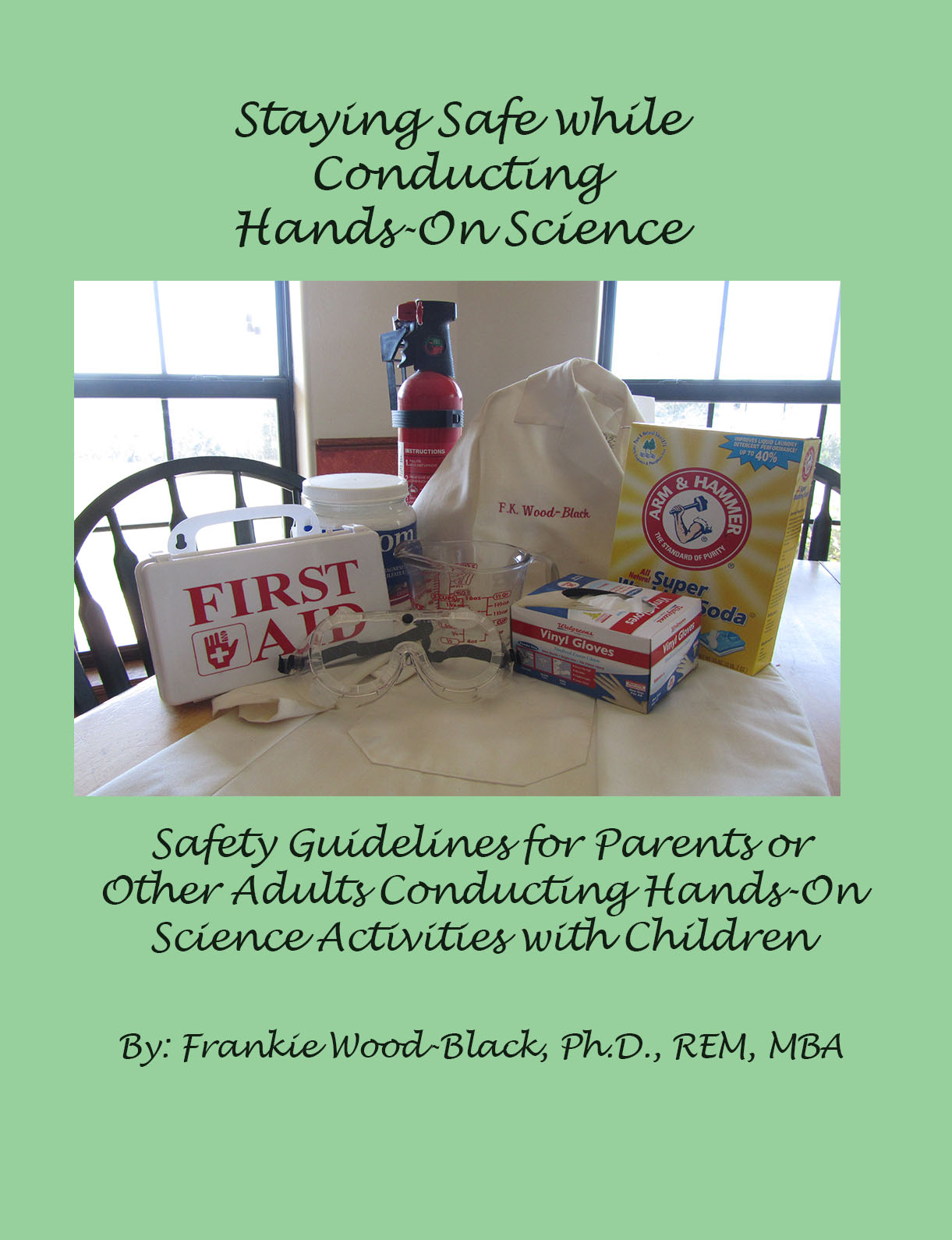
Have fun and don’t forget to stay safe!  (PS if you need safety resources you can always pick up a copy of Staying Safe while Conducting Hands-On Science.)

The School Year is Here

Now that Labor Day Weekend is here – School is officially back in session. It is time to get back into the swing of things. Do you need science lesson plans? Do you need some interactive ideas? Looking for free resources? Here are some places to start:

From Discovery Education – http://www.discoveryeducation.com/ – In addition to their usual offerings – there is a new package from the Navy.

From National Geographic – http://education.nationalgeographic.com/education/?ar_a=1

From the USGS: http://education.usgs.gov/

From the American Chemical Society – http://www.acs.org/content/acs/en/education.html

From NOAA: http://www.education.noaa.gov/

From NASA: http://www.nasa.gov/audience/foreducators/ specifically from the Jet Propulsion Laboratory: http://www.jpl.nasa.gov/education/index.cfm?page=115

Have a great year in Science.

Getting ready for the new school year! Science Resources

Are you getting ready for the new school year?  Have you even thought about it yet?

For many homeschoolers, July is the time to savor the last bits of summer and to start thinking about the new school year.  So, it is planning season.

Are you planning a science curriculum this year?  What resources are you going to use?  No matter what resource you are planning – you need to stay safe.  Sophic Pursuits – has a book for you.

Cover Hands without Spine

This book is designed primarily for the home school parent to help them assess the experiments and activities that can be found in books or on the internet.  You can get this book through your distributor or it is available in paperback, KindleTM ebook, and a downloadable PDF.  More information can be found here.

Are you looking for a high school chemistry curriculum?  The big challenge here is not finding a good text, it is finding a laboratory portion that can be done at home.  Sophic Pursuits is working to help you here as well.


Cover pic

This laboratory course is designed to accompany any chemistry text or can stand alone.  The course is written so that any parent or instructor can us it – whether you have a science background or not.  It focuses on basic laboratory skills that the high school student will need for that freshman laboratory in college – measurement techniques, chemical calculations, laboratory note taking, and laboratory reports.

The chemicals and experiments are designed such that you can use traditional laboratory equipment or items from your kitchen. It comes with an equipment needs list with references about purchasing the required items.  Sophic Pursuits has worked hard to make this course affordable and the required items should be easily obtained at a local hobby shop, hardware store, grocery store or the internet.  A sample laboratory activity – a chemical scavenger hunt – has been posted here.  In this activity, the student will be looking for chemical information: name, physical properties, etc., as well as establishing a laboratory notebook.  Instructions for the activity; background information about chemicals and chemical formulas;  and information about setting up a laboratory notebook are included as part of the laboratory.

The  laboratory course includes:

  • A Safety Information Scavenger Hunt
  • A Chemical Information Scavenger Hunt
  • Accuracy and Precision
  • Measurement
  • Density
  • Physical Properties and States of Matter
  • Moles, Molecular Weight, and Molarity
  • Freeze Point Depression
  • Writing a Laboratory Report
  • Exploring Solubility
  • Precipitation Reactions and Yield
  • Exploring Chemical Reactions
  • Putting It All Together to Determine an Unknown

There will be both a student and instructor manual.  Sophic Pursuits is looking for 10 families to pilot the program.  These pilot families will receive drafts of the student and instructor information as well as a support from the author.  The idea behind the pilot will is to refine the draft manuals in order to provide a better overall product.  If you are interested in piloting the first semester course please contact us. Remember the number of free programs are limited.


Exploring Weather and Other Fluids

It is spring time in Oklahoma – so that means weather (severe weather) is just around the corner. And, it also means some really cool science that can be done to explore concepts like Archimedes’ Principle, Bernoulli’s equations and principles, and Pascal’s Law. Here are few links to keep you busy:

Here is a quick weather book of experiments

One for Archimedes’ Principle

And another for Pascal’s Law

Volcanoes – Beyond baking soda and vinegar

Are you working on a volcano lesson plan?  Want to do something more than just the traditional baking soda and vinegar eruption?  How about exploring the properties of liquids?

When studying volcanoes, the topics of molten rock, lava flows, lahars, and pyroclastic flows are typically included.  Depending upon your lesson plan, you might have a brief mention of how different materials “flow” at differing rates, or how different lavas have different flow properties based upon the silica content.  This flow property is called viscosity – i.e. the property of a fluid that resists the forces causing the material to flow.

Everyone has some hands-on knowledge of viscosity.  Think about the difference in the flow of water versus maple syrup or motor oil on a cold morning versus a hot day.  Yet, we typically don’t do any hands-on science related to this physical property of fluids.  An Earth Science – Volcano lesson is a wonderful place to add this hands-on activity.

Now for your recommendations.

From SEED – A laboratory on the Viscosity of Liquids

From the Royal Society of Chemistry – Viscosity

Or, from Sophic Pursuits – Viscosity Explorations

Some safety precautions.  Know the materials you are using.  The Viscosity Exploration uses dish soap, vegetable oil, corn syrup and water.  It also looks at the change in viscosity with temperature.  So children need to work with an adult to make sure there are no burns.  But, the experiment can be done using ice water, cold water and hot tap water.

Just remember to be safe!

February is Snack Food Month

Besides Valentines Day and Presidents Day – February is Snack Food Month.  Makes sense in the month leading up to Lent, the month of the Super Bowl, and a day focused on chocolates (Valentines Day) – that February would be dedicated to the ever present snack food.

There are lots of activities that can demonstrate science principles using food – so it seems appropriate for snack food month to highlight some food related science.  Penn State has a great food science website that points to a number of other sites that focus on various science activities.

So – explore how molecule handedness changes how it smells.

Find the speed of light using a marshmallows.

Measure the “energy” in food.

Test for glucose and starch.

And have some fun!  – But be safe!

Remembering and honoring

On the eleventh hour, of the eleventh day of the eleventh month – World War I came to an end.  This day is celebrated today as Veteran’s day in the United States.  A Monday in November is set aside as a federal holiday to allow communities to honor those who have served and those who serve.

As homeschool families, this day provides an opportunity to integrate our various curriculum activities with what is happening in the community.  There is an opportunity to explore history, and conduct interviews with individuals who witnessed events first hand.  There is an opportunity to participate in community activities such as parades, concerts, flag raising and lowering ceremonies, and visiting cemeteries.

While we think primarily of history, writing, poetry, and literature for activities related to Veteran’s day – there are some science related topics that can be incorporated as well.

Weather influences history – a wind sock (you can find several craft ideas for making a wind sock) may be an excellent way to show a bit of patriotism as well as incorporating how weather may impact world events.

Technology – while it may have been developed for defense – there are a number of peace time applications of various technologies.  Infrared detection is a great example.  The infrared cameras can see flaws in metals, and help detect with early detection of equipment failures.  Medicine and medical treatments have been influenced by events on the battlefield.  Even how goods are transported to your local big box store – is the result of solving a problem during the Berlin Airlift.

Science can be reflected in a number of ways as you celebrate this holiday.  You can see it right in front of you in the form of medical devices, architecture, and the overall health of some of those participating in the parade.  Just take a quick second to recognize it.

But, don’t forget to thank that veteran for his/her service.  It is their dedication to our values that allow us to have the freedoms we hold dear.


Fun Activities for November

Now that Halloween has past and we are beginning to look toward the holiday season – there are a number of activities that can be integrated into any curriculum.  In the northern hemisphere – fall colors are in full display.  In North America – Canada and the US – Thanksgiving is just around the corner. And, the summer season is starting in the southern hemisphere.

So here are some ideas for some fun science!

Natural dyes are great this time of year – as fruits, berries and spices are abound.  The Learning Channel has a “how stuff works” activity on natural dyes. There is an integrated science-art lesson plan from the University of Minnesota.   And, there is a quick article from Gardening Know How, which will help you to integrate science into everyday life.

While food science is fun any time of year – in the US and Canada – November is a feasting month.  Chemistry and physics abound in the kitchen – look for anything written by Shirley Corriher (Cookwise and Bakewise) – she has wonderful descriptions of what is happening during the cooking and baking.  Penn State has a list of several food science activities.  The American Chemical Society has an activity page for food as well.

So have fun in November – doing great science while playing in the kitchen.

Don’t forget to stay safe while conducting any hands-on activities with children.  These activities should be conducted under the supervision of an adult and should be reviewed prior to conducting them.  For more safety tips for hands-on activities.  Return to http://www.sophicpursuits.com/Educational-Materials.html.

Need some fun Halloween Activities or Demonstrations

The American Chemical Society has a great page of fun Halloween based activities, demonstrations and experiments – you can find them at http://www.acs.org/content/acs/en/education/students/highschool/chemistryclubs/activities/chemclub-halloween-activities.html#P25_2879

But – remember that many of the activities need to be done under direct supervision of an adult or teacher.  You can also find – safety tips and resources on the ACS pages or from Sophic Pursuits